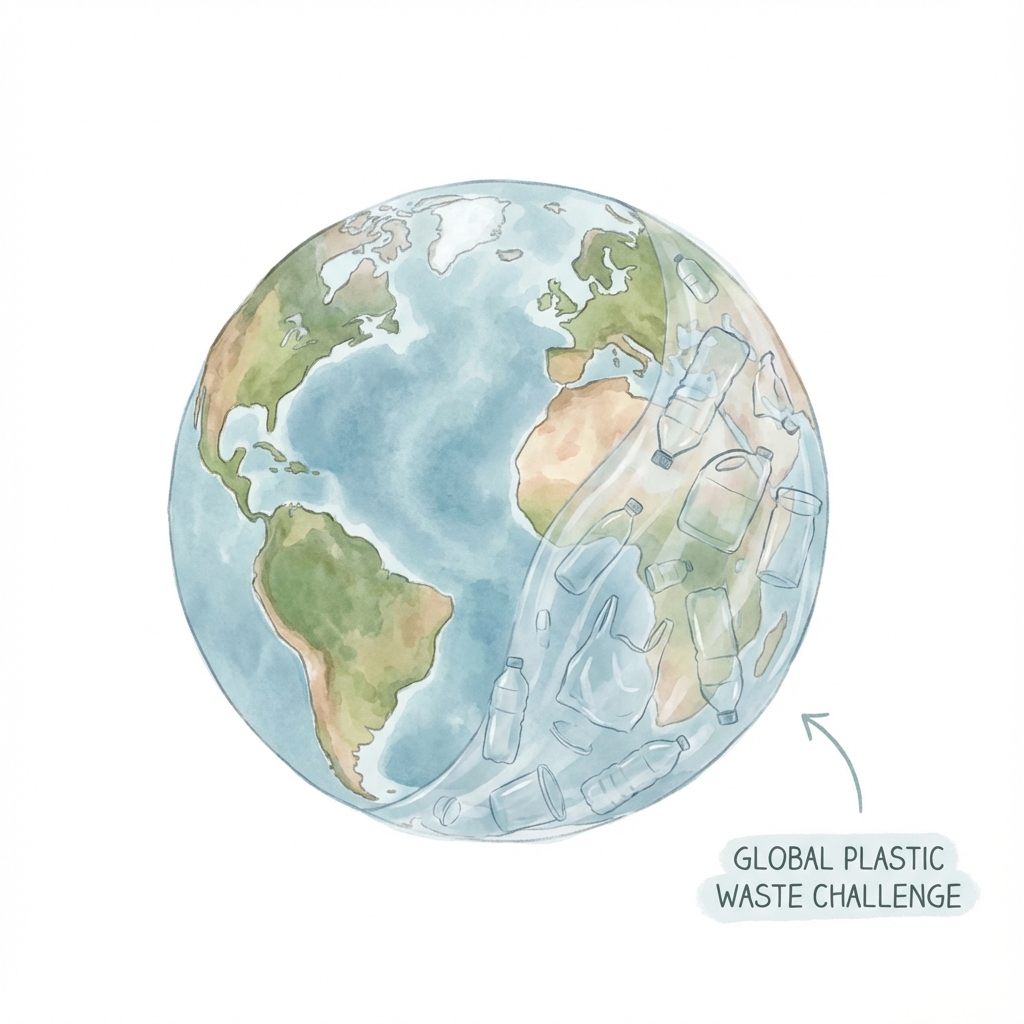
Plastic was created as a strong, lightweight, and affordable material. Over time, it replaced natural
materials in bags, bottles, plates, packaging, and cutlery.
It made life easier, cheaper, and faster.
What no one expected was the long-term damage it would cause to the environment.
🛍️➡️🥤➡️🍽️
Why Plastic is Not Earth-Friendly
Plastic does not break down naturally. Instead, it slowly breaks into tiny pieces called
microplastics.
These pieces stay in the soil, water, and air for hundreds of years.
Plastic never truly disappears — it only spreads.
“Plastic does not return to nature. It stays within it.”
Hidden Plastic in Everyday Items
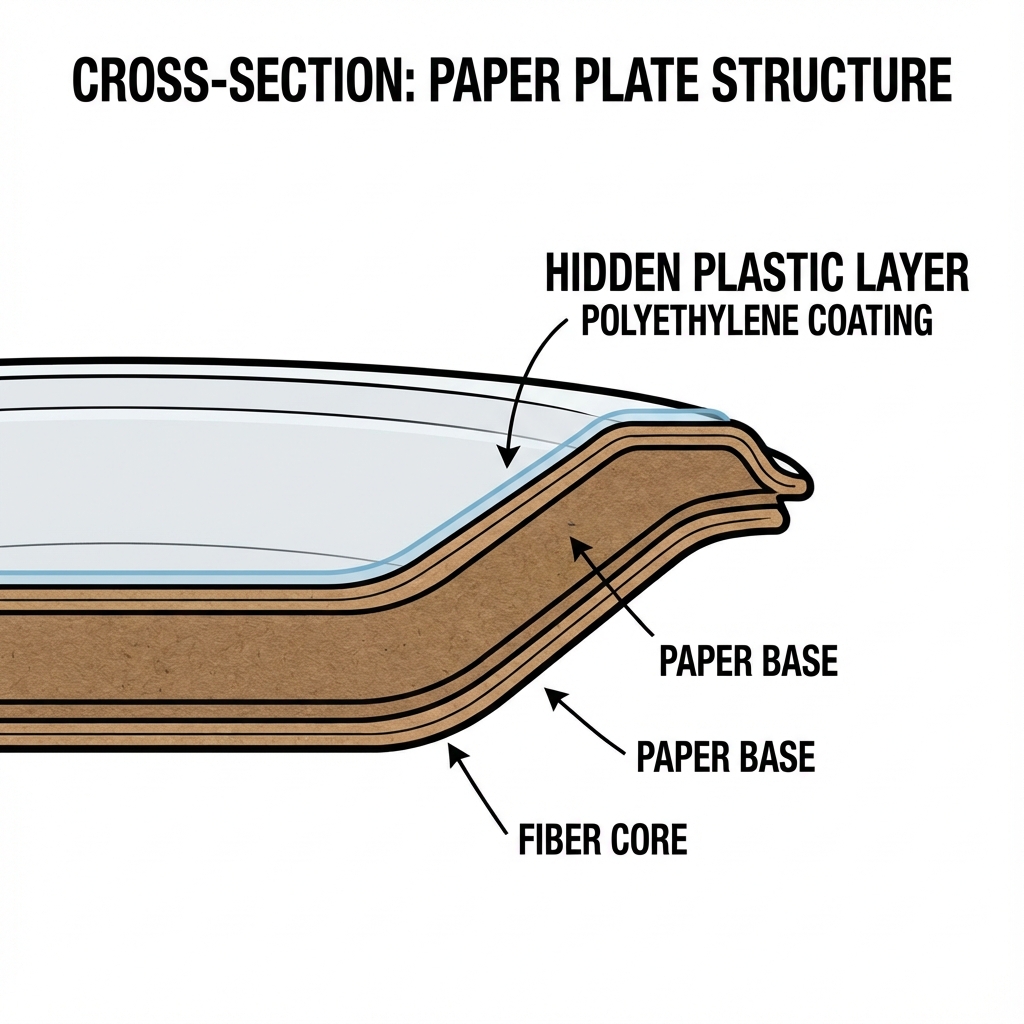
Cross-section: Paper plate with hidden plastic layer
Many items that look eco-friendly still contain plastic.
Paper plates and cups often have a thin plastic coating to stop liquid from soaking through.
This coating makes them hard to recycle and not fully
biodegradable.
Are We Consuming Plastic Without Knowing It?
Microplastics have been found in water, food, and even the air.
When plastic comes in contact with hot food or liquids, tiny particles can mix with what we consume.
While research is ongoing, reducing plastic contact with food is a safer choice.
What is Single-Use Plastic?
Single-use plastic items are designed to be used once and thrown away.
❌
Carry Bags
❌
Cutlery
❌
Bottles
❌
Wrappers
These items are used for minutes, but remain in the environment for
generations.
The Convenience vs Consequence Problem
Plastic feels convenient in the moment. But its consequences last far longer than its usefulness.
Every item thrown away adds to landfills, pollution, and environmental damage.
“Convenience lasts minutes. Consequences last generations.”
Reflection
Plastic solved short-term problems. But it created long-term challenges for our planet.
Understanding the problem is the first step toward change.